Tomatoes are great to eat and grow. But there are always issues that crop up when growing tomatoes. This website is devoted to identifying some common problems and giving solutions to fix them.


Blossom-End Rot or Calcium Deficiency – the tomato will rot at the end, not connected to the plant. Tomato plants need calcium to produce quality fruit. Calcium nitrate or some calcium source should be used early on in the plant’s life (at least 3 weeks after transplanting).


Magnesium Deficiency – Shows up on lower leaves first. To prevent this issue, use Epsom salt when tomatoes are knee-high at 4 lb/greenhouse every other week, or 4 tablespoons per gallon of water every other week, or 20 pound/acre.


Aphids – are soft-bodied insects that suck on the leaves and stems. They are mostly found on the underside of leaves. If they are unchecked, then the plant will wilt and become useless. Homeowners use insecticidal soap or many different insect control chemicals for the garden. Commercial growers should use Admire early on and malathion later in the crop.


Spider Mites – will attack the top of the plant first. Homeowners can use insecticidal soap. Commercial growers can use Floramite, M-Pede, or TriTek.


Stink Bugs – make a tomato have yellow spots and specks wherever they have fed. The tomato is still edible. It is just not as pleasant to look at. There are several products on the market that will control them. Make sure the label states stink bugs as an insect that the product will control. Liquid Sevin, Bonide Eight, and Ortho Bug-B-Gon Max should be used by homeowners. Commercial growers can use pyrethroids, Venom, Scorpion, or Actara.


Tomato Fruitworm or Corn Earworm – no matter what you call them, they are a pest. They damage and destroy harvestable produce. Homeowners should use Liquid Sevin (3 PHI – days until you can harvest), Bonide Eight (1 day PHI), and Ortho Bug-B-Gon Max (1 day PHI). Commercial growers can use Dipel, Coragen, Belt, Lannate, or Radiant.


Blooms Blow (stress on the plant) – Not enough or too much fertilizer, or leaking heater in greenhouse.
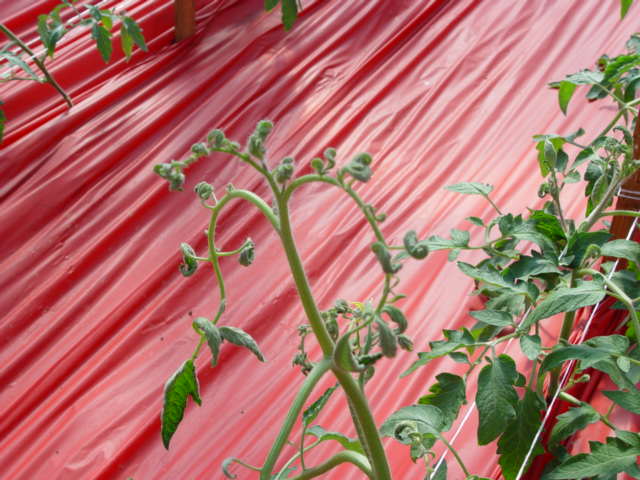

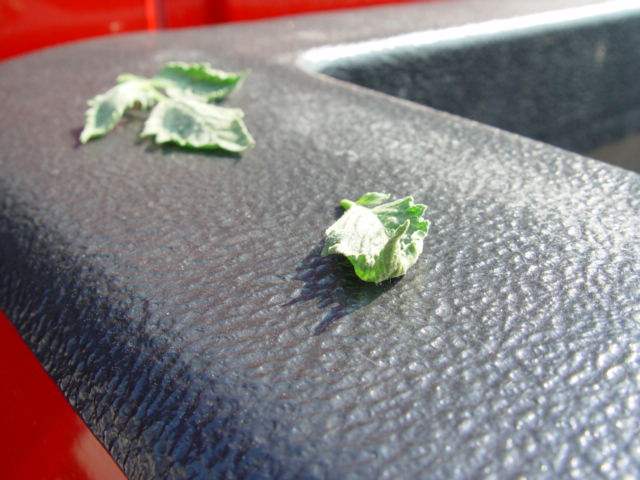
Herbicide Injury – can show up in many different shapes and areas in the plant. 2,4-D makes the tops of the plant curl and twist. Roundup will make the middle of leaves yellow. Other herbicides will make the end of the leaf pointy and stick straight up. Be careful how weeds are controlled near crops.


Fruit Cracking – This is due to rapid uptake of water by the fruit, as a result of heavy rain or heavy watering. The water can move to the fruit through the roots and also directly into the fruit around the stem scar. Cracks may be concentric (around the stem) or radial (radiating out from the stem). Crack-resistant varieties and maintaining uniform soil moisture by mulching and steady watering are the solution to this problem.

Sunscald – People sunburn, and so do tomatoes. The leaves on a tomato plant act as sunscreen to the growing fruit. Without good leaf cover, the tomato will sunscald. To eliminate this problem, maintain healthy plant growth to shade the tomatoes.


Poor ventilation in greenhouses causes major damage to plants. This is especially true when “chicken heaters” are the main source of heat. Opening doors or fans kicking on early in the morning will help prevent this problem.


Frost – The frost-free date for Grainger County is April 15th. No tomatoes should be placed in the garden or field before this date. Most plants, if not extremely damaged, will grow out of it.


Early Blight – is common in most tomato patches. Please note the bullseye rings in the leaf spots. Homeowners can use Fung-o-nil or Dac-o-nil every 7 days to prevent most diseases. Commercial growers should use Bravo or Fontelis.
Special thanks to the following for the use of photos: UT Extension, University of Kentucky, North Carolina Cooperative Extension, Picture World, University of Delaware Cooperative Extension, University of Georgia, Freshare.net, Royal Horticultural Society, Virginia Cooperative Extension, and Missouri Botanical Garden.